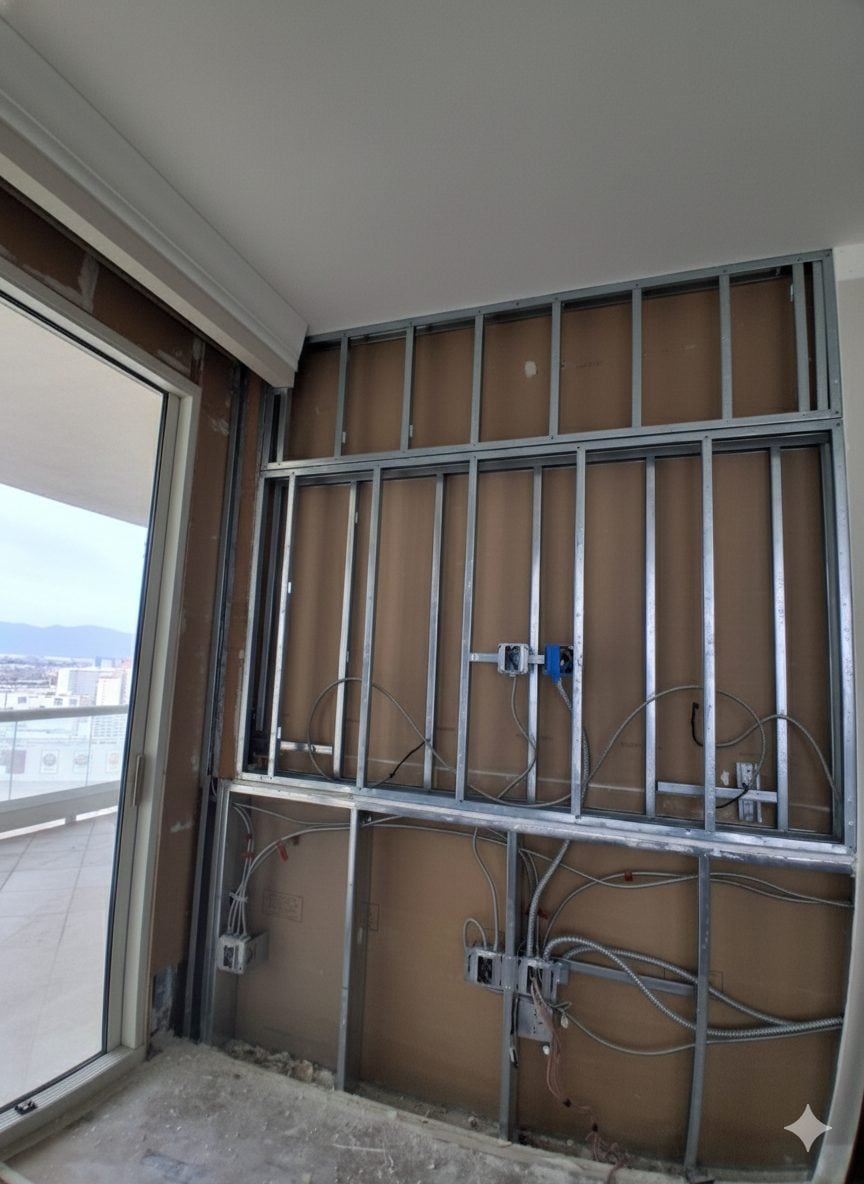
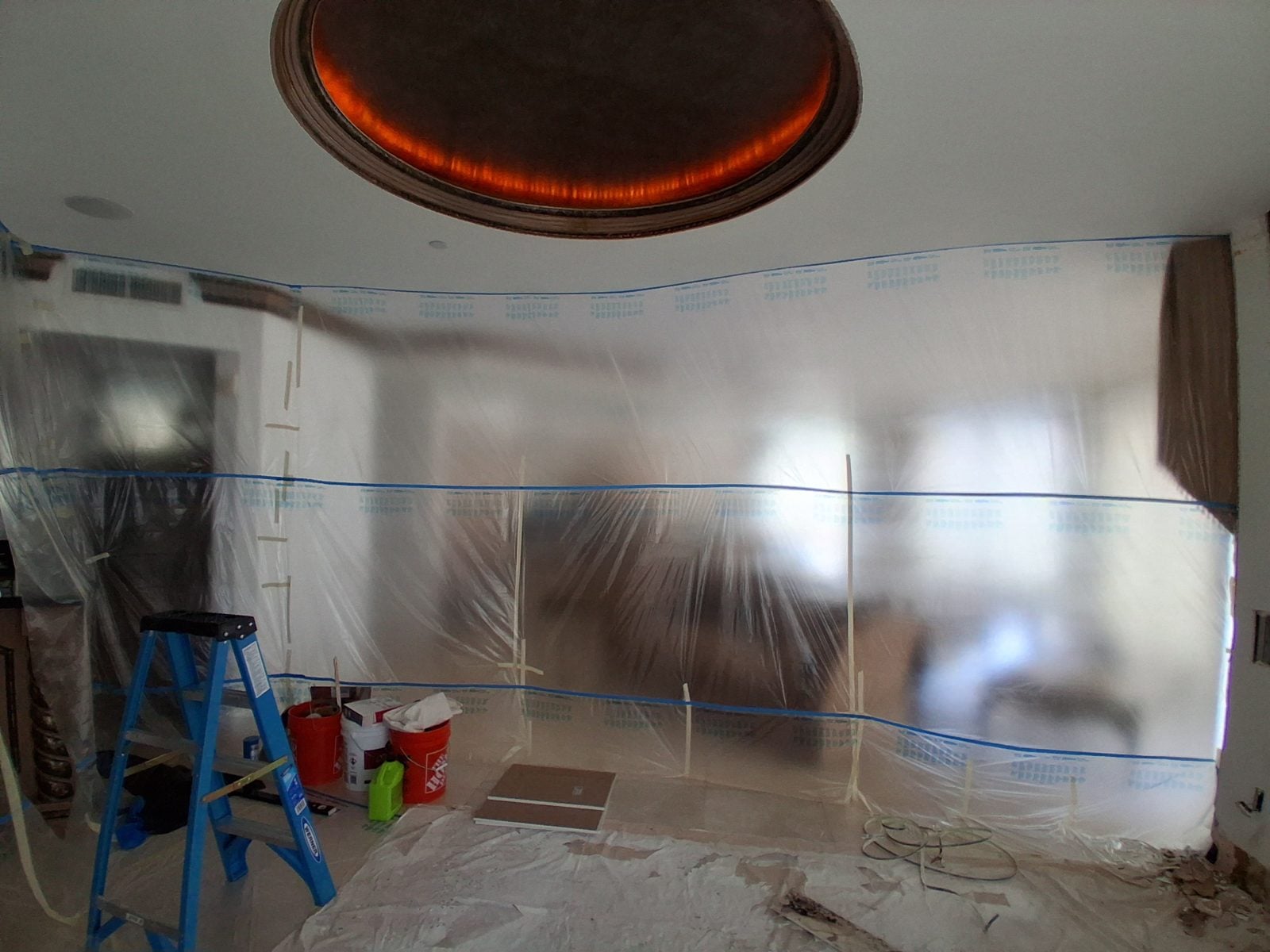
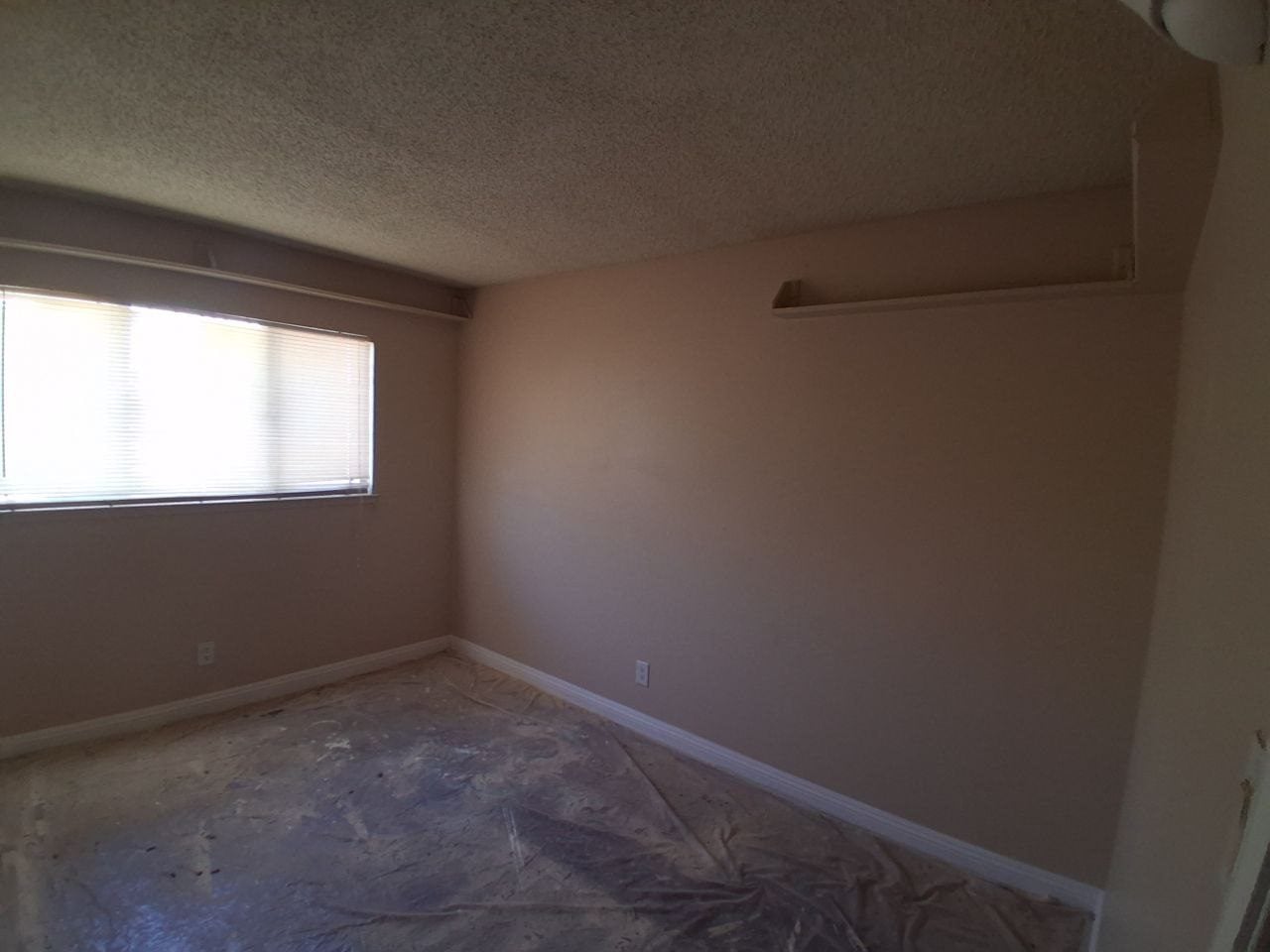
Small dents and screw holes take a skim of compound and a touch of texture. Holes up to a few inches get a backed patch or a mesh patch. Anything larger, or anything near a corner, gets a new piece of drywall screwed to wood blocking or to the studs, then taped, coated and feathered out well past the edges so there is no hump.
Time on a job is set by drying, not by cutting. Each coat of compound has to dry before the next one, and texture has to dry before primer. Dry desert air speeds that up compared with humid climates, but a deep fill or a large ceiling patch still needs more than one visit. Setting-type compound (the powder you mix with water) lets us stack coats faster on small repairs.
What helps from your side: leftover paint from the room (the label on the lid tells us the color and sheen), a clear path to the wall, and a note on anything hanging nearby that should come down first, such as shelves, art or a TV mount.